Griselda
The DecameronGriselda is a shepherd’s daughter raised to the rank of marquess through marriage, whose husband tests her by taking away, one by one, the security, status, and family he has given her. She meets each apparent reversal with composure, but the story’s final reunion does not erase the severity of what she has endured: its ending praises her virtue while calling Gualtieri’s trials excessively harsh and intolerable.
Identity and Marriage
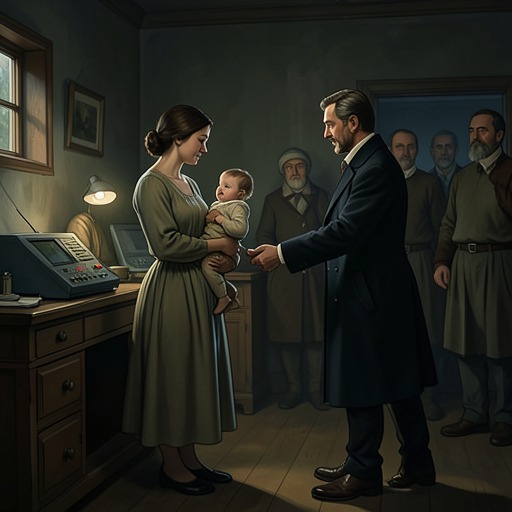
Griselda lives with her father, Giannucolo, in a poor village near Saluzzo, where she tends sheep. Gualtieri, the marquess, chooses her as his wife despite the difference between her lowly circumstances and his high rank. On the appointed wedding day, he rides with his company to her village and finds her hurrying home from the spring with water. He goes into her father’s house alone and asks whether, if she becomes his wife, she will strive to please him and remain obedient, whatever he may do or say. Griselda agrees. Gualtieri then brings her outside, has her stripped in front of the assembled company, and dresses her in the rich clothes prepared for a bride. He asks publicly whether she will have him as her husband; she assents, and they marry before the gathering.
The scene makes her change of rank visible in the clothes placed over her rustic dress. Yet the marriage is not presented as an equal bargain: Gualtieri sets the terms, while Griselda promises obedience before she knows what they will require. Her assent establishes the condition on which he will later claim to test her, but it does not make the ordeals she faces any less his deliberate choice.
From Shepherd’s Daughter to Marquess
After marriage, Griselda appears to have changed not only her clothing but her manners. She is described as gracious, pleasant, and well-mannered, and she serves her husband diligently. She also treats his subjects with such kindness that they love and honor her. People who had thought Gualtieri foolish to marry beneath his station come to admire his judgment, believing that he alone recognized the worth hidden beneath her poor clothes and rustic upbringing.
Griselda’s social standing thus changes through more than the wedding ceremony. Her conduct wins the regard of the community, and the story sets inherited rank against demonstrated virtue. The contrast is sharpened by the narrator’s closing reflection: divine spirits may be found in poor cottages, while some who rule princely houses would be more fit to tend swine. Griselda’s character, not her birth, is the measure by which the story asks her audience to judge her nobility.
The Tests of Patience
After Griselda gives birth to a daughter, Gualtieri tells her that his subjects resent her low birth and are displeased that she has borne a child. She answers without changing her countenance, saying that she recognizes her humble station and is content to accept whatever he thinks best. Gualtieri is pleased by her lack of pride. He then sends a servant, instructed to perform the scene as though carrying out a terrible command, to take the infant away. Griselda understands that her husband has ordered the child’s death. Though anguished, she kisses and blesses her daughter, gives her to the servant, and asks only that the child not be left to wild beasts or birds unless that too is commanded. In truth, Gualtieri sends the girl to Bologna to be raised by a female kinswoman.
Several years later, Gualtieri makes a more public trial of Griselda. He claims that he can no longer bear to have her as his wife and presents counterfeit letters as proof that the Pope has allowed him to put her away. He invokes the difference between their families: his ancestors were great lords, he says, while hers were country people. Griselda contains her tears and returns the wedding ring, treating the rank and security she received as a loan that Gualtieri is entitled to reclaim. Because he had once received her naked, she says she is willing to leave naked too, asking only for a shift in recognition of the maidenhood she brought to the marriage. He grants that small request. After more than thirteen years as his wife, she leaves barefoot, bareheaded, and wearing only the shift, while those who witness her departure lament her treatment.
The False Bride and the Return
Back at Giannucolo’s house, Griselda puts on the clothes her father had kept from the morning of her wedding and resumes the humble work of his household. Gualtieri then tells her that he is bringing home a new bride and asks her to prepare the rooms and the feast. Though the request wounds her because she still loves him, she agrees. Wearing coarse homespun, she sweeps and orders the chambers, arranges the hangings and table coverings, prepares the food, and invites the ladies of the country. When the wedding feast arrives, she welcomes the supposed bride with a cheerful face and commends both the young woman and her young brother.
The pair are not strangers: the girl, now twelve, is Griselda’s daughter, and the six-year-old boy is her son. Gualtieri has had both children raised in Bologna by his kinswoman, and has arranged for them to arrive with an honorable company while concealing their parentage. Griselda does not know that the children she believes lost are alive, or that the girl presented as her husband’s new bride is her own daughter. The concealed truth turns the apparent repudiation into the prelude to recognition, but it also reveals how completely Gualtieri has controlled the information on which Griselda must act.
Recognition and Narrative Significance
At the feast, Gualtieri asks Griselda what she thinks of the young woman. She praises her beauty and discretion, then asks him not to subject this new wife to the same sufferings, since a younger woman raised delicately might not endure them as Griselda has. That answer confirms that she has continued to believe the deception and has not let her own experience harden her judgment of another. Gualtieri finally tells the assembled company that the supposed bride and her brother are their children, that he never put them to death, and that he remains Griselda’s husband. He embraces her and brings the children to her; she weeps for joy as the truth is disclosed.
The ladies then replace Griselda’s mean attire with one of her own magnificent dresses. Reunited with her children and publicly restored to her place, she shares in several days of feasting. Gualtieri also raises Giannucolo from labor to an honorable station appropriate to his position as father-in-law, and Griselda lives long and happily with her husband. The story’s judgment remains divided in a revealing way: those present celebrate the happy outcome and regard Griselda as exceptionally wise, yet they consider Gualtieri’s tests too harsh to bear. Its final counterfactual sharpens the criticism, imagining that he might have received a fitting answer from a wife who repaid his treatment in kind. Griselda’s constancy is the story’s marvel, but the cruelty required to demonstrate it is not left unquestioned.